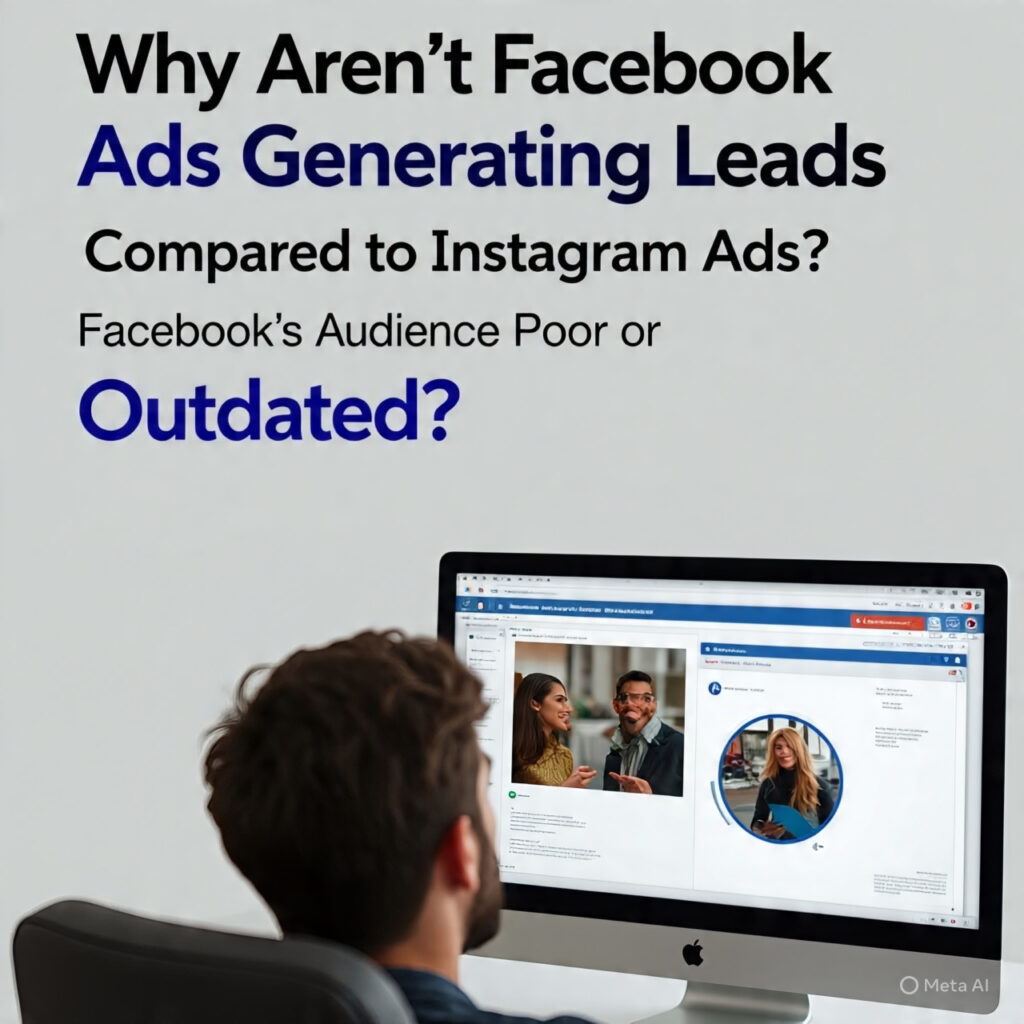
As businesses increasingly rely on social media advertising to drive leads, many marketers are noticing a trend: Facebook ads often underperform in lead generation compared to Instagram ads. This has sparked a common question: Is Facebook’s audience poor or outdated, or is there something else at play? In this post, we’ll explore the reasons behind this discrepancy, debunk myths about Facebook’s audience, and provide actionable strategies to optimize your ad campaigns on both platforms. Let’s dive in!
Understanding the Platforms: Facebook vs. Instagram Facebook and Instagram, both owned by Meta, are powerhouse platforms for digital advertising, but they cater to different audiences and behaviors. With over 3 billion monthly active users on Facebook and 2 billion on Instagram (as of 2024), both platforms offer massive reach. However, their user demographics and engagement patterns differ significantly, which impacts lead generation outcomes.
- Facebook: Known for its broad demographic, including older users (35+), and a focus on community engagement, news, and long-form content.
- Instagram: Appeals to a younger audience (18–34), with a visual-first culture centered around Stories, Reels, and aesthetically driven content.
These differences influence how users interact with ads and, ultimately, how effective your campaigns are at generating leads. Let’s break down why Facebook ads might not be delivering leads as effectively as Instagram ads and whether the platform’s audience is truly “poor” or “outdated.”
Why Facebook Ads May Not Be Generating LeadsIf your Facebook ads aren’t driving leads but Instagram ads are performing well, the issue likely lies in strategy, not the platform’s audience. Here are the top reasons for this discrepancy, backed by insights from industry sources:
- Targeting Misalignment
Poor audience targeting is one of the most common reasons for low lead generation on Facebook. With its vast user base, Facebook allows for highly specific targeting based on demographics, interests, and behaviors. However, if your audience is too broad, too narrow, or misaligned with your offer, your ads will fail to resonate. For example, targeting a generic audience for a niche product (e.g., luxury skincare) can lead to low engagement.
Solution: Use Custom Audiences (based on website visitors or email lists) and Lookalike Audiences to reach users similar to your best customers. Avoid overly specific interest-based targeting, as it can confuse the algorithm. Instead, leverage Meta’s Advantage+ Audience, which uses AI to find high-intent users. Learn more about optimizing targeting in our guide on Social Media Advertising Best Practices (#). - Ad Creative and Messaging Mismatch
Facebook users expect ads that align with their browsing habits, which often include socializing and consuming informative content. If your ad creative is overly salesy or lacks a clear value proposition, users may scroll past. Instagram, with its visual-first approach, thrives on eye-catching imagery and concise messaging, which may align better with your current creatives.
Solution: Tailor your ad creative to each platform. On Facebook, use benefit-driven copy and high-quality visuals (e.g., before-and-after images or testimonials). Include a strong call-to-action (CTA) like “Sign Up Today” or “Get Your Free Quote.” For inspiration, check out our post on Crafting Compelling Ad Creatives (#). - Campaign Objective Errors
Choosing the wrong campaign objective in Meta Ads Manager can sabotage your lead generation efforts. For instance, using a “Traffic” or “Engagement” objective instead of the “Leads” objective on Facebook can result in clicks but no conversions. Instagram’s lead ads, especially with Instant Forms, are optimized for quick conversions within the app, which may explain their better performance.
Solution: Always select the “Leads” objective for lead generation campaigns. Use Instant Forms for frictionless conversions or direct users to an optimized landing page. See our guide on Setting Up Effective Ad Campaigns (#) for step-by-step instructions. - User Intent and Platform Behavior
Facebook users often browse to connect with friends or explore communities, meaning they may not be in a buying mindset. Instagram users, however, are more likely to engage with brands during discovery-driven scrolling, especially via Stories and Reels. This difference in intent can make Instagram ads more effective for immediate lead capture.
Solution: Use Facebook for top-of-funnel strategies like brand awareness and retargeting, then drive conversions on Instagram. Combine this with a robust follow-up strategy using tools like CRM Integrations (#) to nurture leads. - Budget and Algorithm Learning
A low budget can limit Facebook’s algorithm from exiting the learning phase, reducing its ability to find high-intent users. Instagram’s visual appeal and younger audience may generate quicker results with smaller budgets, especially for visually driven products.
Solution: Allocate a higher initial budget (e.g., $20–$50/day) to allow Facebook’s algorithm to optimize. Use our Budget Optimization Tips (#) to maximize ROI. - Landing Page or Form Issues
If your Facebook ads direct users to a landing page, issues like slow loading times, poor design, or unclear CTAs can reduce conversions. Instagram’s Instant Forms keep users within the app, minimizing drop-offs. Additionally, overly complex forms on Facebook (e.g., too many fields) can deter users.
Solution: Optimize landing pages for speed and clarity, or use Instant Forms for Facebook lead ads. Check out our post on Optimizing Landing Pages for Conversions (#) for expert tips. - Ad Fatigue and Frequency
If your target audience sees the same ad too often, they may experience ad fatigue, leading to lower engagement. Instagram’s dynamic formats (e.g., Reels, Stories) allow for frequent creative refreshes, keeping campaigns fresh.
Solution: Monitor frequency metrics in Meta Ads Manager and rotate ad creatives regularly. Learn how to combat ad fatigue in our guide on Refreshing Your Ad Campaigns (#).
Is Facebook’s Audience Poor or Outdated?The notion that Facebook’s audience is “poor” or “outdated” is a misconception. With 3 billion monthly active users, including 48% of the U.S. population, Facebook’s audience is neither small nor irrelevant. While Instagram skews younger (18–34), Facebook’s user base spans all age groups, with significant representation among 35–54-year-olds, who often have higher purchasing power. Posts on X, like one from
@LizsocialMedia1, highlight frustrations with Facebook ads but attribute failures to strategy, not audience quality.The key difference lies in user behavior and platform strengths:
- Facebook: Ideal for targeting older, decision-making audiences and building long-term brand relationships.
- Instagram: Better for younger audiences and impulse-driven conversions due to its visual and mobile-friendly nature.
Rather than a “poor” audience, Facebook’s challenges stem from improper targeting, outdated creatives, or misaligned campaign objectives. Both platforms can generate high-quality leads when used strategically.
Why Instagram Ads May Outperform Facebook AdsInstagram’s lead generation success often comes down to its platform dynamics:
- Visual-First Appeal: Instagram’s focus on images, Stories, and Reels makes it easier to capture attention with compelling visuals.
- In-App Conversions: Instant Forms allow users to submit information without leaving the app, reducing friction.
- Younger, Engaged Audience: Instagram’s 18–34 demographic is highly active and receptive to brand discovery.
- Dynamic Ad Formats: Reels and Stories enable creative, short-form content that drives quick engagement.
For example, a 2024 study by Meta reported that 16.6% more Instant Forms were submitted in 2023 compared to 2022, with Instagram leading due to its seamless user experience. Businesses targeting younger audiences or visual products (e.g., fashion, beauty) often see better results on Instagram.
Actionable Strategies to Boost Facebook Lead GenerationTo close the gap between Facebook and Instagram lead generation, try these proven strategies:
- Refine Targeting with Data
Use Custom Audiences from your CRM or website data and create Lookalike Audiences to reach similar users. Avoid overly broad targeting, and test Meta Advantage+ Audience for AI-driven optimization. - Tailor Creatives to Facebook
Design ads with clear, benefit-driven copy and high-quality visuals. For example, a local business could use before-and-after images with a CTA like “Book Your Free Consultation Today.” - Use Instant Forms
Implement Instant Forms to keep users on-platform, mirroring Instagram’s seamless experience. Keep forms simple, asking only for essential information (e.g., name, email). - Leverage A/B Testing
Test different ad elements (e.g., headlines, visuals, CTAs) to identify what resonates with your audience. Split-test Facebook and Instagram placements to compare performance. - Integrate with CRM Tools
Use tools like LeadsBridge (#) or SaveMyLeads (#) to automate lead data transfer to your CRM, ensuring prompt follow-ups. This is critical for nurturing leads from both platforms. - Combine Facebook and Instagram Campaigns
Run cross-platform campaigns to leverage Facebook’s broad reach for awareness and Instagram’s visual appeal for conversions. Allocate budgets based on performance (e.g., 60% Instagram, 40% Facebook). - Monitor and Refresh Ads
Check frequency metrics to avoid ad fatigue. Rotate creatives every 2–3 weeks to keep your audience engaged.
For more tips, explore our Ultimate Guide to Social Media Advertising (#).
Facebook’s Audience Isn’t the Problem Facebook’s audience is neither poor nor outdated—it’s vast, diverse, and highly valuable when targeted correctly. The difference in lead generation between Facebook and Instagram often comes down to user behavior, creative alignment, and campaign optimization. By refining your targeting, tailoring creatives, and leveraging tools like Instant Forms and CRM integrations, you can make Facebook ads as effective as Instagram ads for lead generation.Don’t give up on Facebook advertising just yet. With the right strategy, you can unlock its potential to drive high-quality leads and grow your business. Start optimizing today, and check out our Social Media Marketing Resources (#) for more insights!