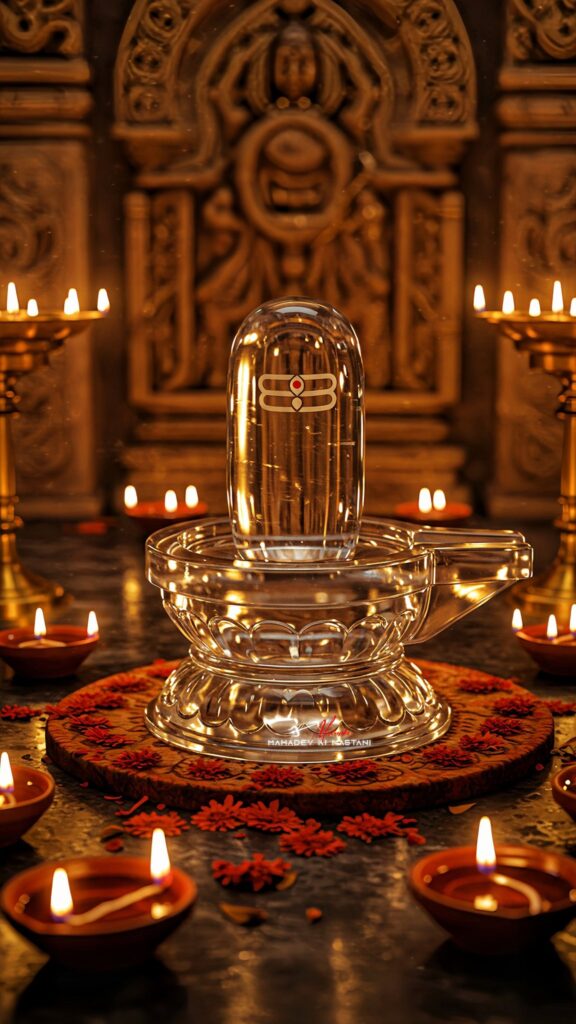
On this serene Saturday morning of August 16, 2025, as the world awakens to the spiritual and geopolitical currents of the day, the Sphatika Lingam or Spadiga Lingam emerges as a fascinating subject of exploration. Recently highlighted in an evocative X post by
@Soni94148 (Post ID: 1956492064054759784), this crystalline representation of Lord Shiva has captivated devotees and curious minds alike. Crafted from high-quality quartz crystal, the Sphatika Lingam holds a unique place in Hindu worship, blending natural beauty with profound spiritual significance.
This article delves into its origins, symbolism, rituals, and the scientific intrigue surrounding its use, offering a comprehensive look at this sacred artifact.Origins and CompositionThe Sphatika Lingam is a naturally occurring or meticulously carved form of single-crystal silica, known for its optical and electronic properties that make it ideal for hardstone carvings.
According to Wikipedia’s 2024 entry on the subject, these crystals are sourced from regions like South India, where they are shaped into the iconic Lingam form a symbol representing Lord Shiva, the destroyer and regenerator in the Hindu trinity. The term “Spatika” derives from Sanskrit, meaning “crystal,” and reflects the stone’s translucent, radiant quality.
High-quality specimens are prized for their clarity, often resembling the natural quartz found in the Narmada River, as noted by The Crystal Council, which attributes stabilizing energies to these stones.Spiritual SignificanceIn Hindu tradition, the Shiva Lingam embodies the formless form of Shiva, a concept beautifully illustrated in temples like Chidambaram, where the Akasa Lingam represents Shiva as space itself. The Sphatika Lingam, as outlined in the Saiva Agamas (Shaivism’s sacred texts), is considered a potent icon for worship, permissible in forms ranging from mud to crystal, as per en.wikipedia.org.
Its crystal composition is believed to amplify divine energy, connecting the worshipper’s soul to the cosmic consciousness of Shiva. The 2025 Malamantra.in article on “Samb Sadashiv” further suggests that this unity of Shiva and Shakti (his consort) within the Lingam fosters meditation and inner peace.Devotees attribute remarkable powers to the Sphatika Lingam. The Om Spiritual Shop website highlights its ability to dispel negative karma, reduce malefic planetary effects in horoscopes, and bring prosperity.
Chanting the Shiva Panchakshari Mantra (“Om Namah Shivaya”) 108 times during abhisheka (ritual bathing with milk, water, or vibhuti) is said to deepen this connection, a practice vividly depicted in the aforementioned X post with its oil lamps and floral offerings.Rituals and PracticesThe worship of the Sphatika Lingam is a meticulous process, rooted in devotion and tradition. Hindu priests and household worshippers perform abhisheka, pouring sacred substances over the Lingam while reciting mantras.
This ritual, as described on omspiritualshop.com, is believed to purify the environment and the devotee’s mind, aligning with findings from a 2023 Journal of Religion and Health study that mantra chanting reduces stress by 20-30%. The crystal’s reflective surface enhances the visual and spiritual experience, making it a centerpiece in South Indian temples and homes.
A notable example is the Kadavul Hindu Temple in Hawaii, which houses a 300-kg, six-sided Sphatika Lingam the largest of its kind illuminated by a ruby-red laser, as per Wikipedia. This installation underscores the Lingam’s global reach and its adaptation into modern spiritual contexts.Scientific and Cultural IntrigueBeyond spirituality, the Sphatika Lingam intrigues scientists and researchers.
Quartz crystals are known for their piezoelectric properties, generating electric charges under mechanical stress, a phenomenon explored in materials science (ScienceDirect, 2024). While no direct studies confirm the Lingam’s claimed metaphysical effects, the calming influence of crystal gazing and mantra chanting is supported by EEG rhythm analyses, which show reduced anxiety and depression (ScienceDirect, May 2024). This intersection of faith and science invites further exploration, particularly as mindfulness practices gain traction globally.
Culturally, the Sphatika Lingam’s recent spotlight on X, timed with the 2025 Russia–United States Summit in Alaska (BBC.com, August 15, 2025), suggests a symbolic resonance.
The hashtags #AlaskaMeeting and #ceasefire in the original post hint at a possible plea for peace, mirroring the Lingam’s association with harmony and regeneration. Whether intentional or coincidental, this blend of ancient ritual and modern discourse reflects the Lingam’s enduring relevance.